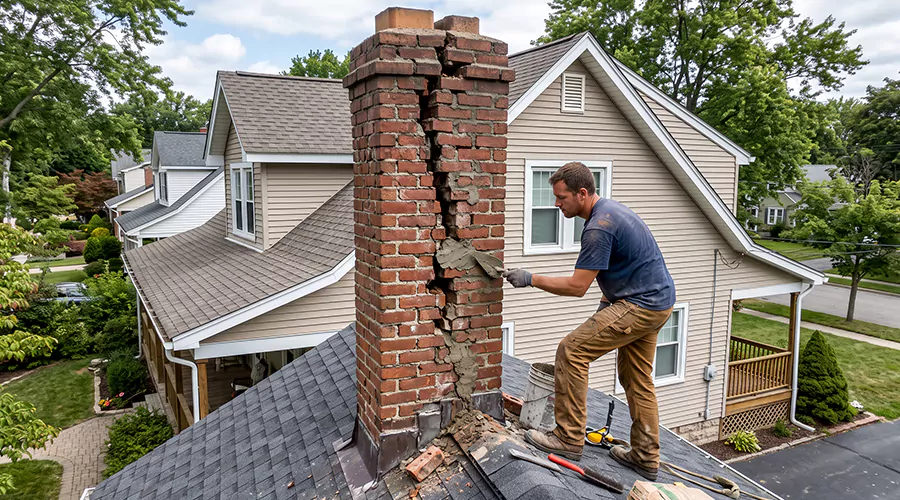
What Causes Chimney Structural Damage?
Discover the main reasons chimneys develop cracks, leaning, loose bricks, and water damage, plus warning signs, repair options, and prevention tips.




Based on 500+ Reviews

Proudly American
Owned & Operated

A chimney is an important part of a fireplace system, but it is constantly exposed to weather, moisture, temperature changes, and environmental conditions. Over time, these factors can weaken the chimney structure and lead to cracks, leaning, loose bricks, water leaks, and other serious problems. When the damage affects the fireplace structure, a fireplace rebuild may be necessary to restore its condition and safe operation.
Chimney structural damage does not usually happen overnight. It often develops gradually because of moisture intrusion, deteriorating materials, poor construction, or lack of maintenance.
Understanding what causes chimney structural damage can help homeowners identify warning signs early and prevent expensive repairs.
Chimney structural damage can be caused by:
Water is one of the biggest causes of chimney structural problems.
Because chimneys are exposed to rain and moisture, water can enter through:
When water enters the chimney structure, it can damage:
Over time, moisture weakens the chimney and can lead to loose bricks, cracks, and structural instability.
Mortar holds chimney bricks together and provides structural support. Regular fireplace sweep services help keep the fireplace and chimney system clean, while damaged mortar may require separate masonry repairs.
Over time, mortar can break down because of:
Damaged mortar joints can cause:
Tuckpointing or masonry repairs may be needed to restore damaged mortar.
Freeze-thaw cycles can significantly affect masonry chimneys.
The process happens when:
Repeated freezing and thawing can cause:
A chimney depends on a stable foundation for support.
Foundation movement can occur because of:
Foundation issues may cause:
A chimney that is leaning should be inspected promptly.
Like other parts of a home, chimney materials deteriorate over time.
Aging can affect:
Older chimneys may develop:
Regular inspections help identify aging-related problems.
Construction quality plays an important role in chimney durability.
Structural problems may result from:
Poorly constructed chimneys may experience problems earlier than properly built systems.
Extreme weather can damage chimney structures.
Potential causes include:
Weather damage may result in:
A chimney inspection after severe weather can help identify hidden damage.
The chimney crown sits at the top of the chimney and helps direct water away from the masonry.
A damaged crown can allow water to enter.
Common crown problems include:
Water entering through a damaged crown can accelerate structural damage.
Flashing creates a waterproof barrier where the chimney meets the roof.
Damaged flashing can allow water to enter areas around the chimney.
Common flashing problems include:
Water intrusion from flashing problems can damage both the chimney and surrounding roof structure.
Neglecting regular chimney care can allow small issues to become major structural problems.
Without inspections, homeowners may miss:
Regular maintenance helps identify problems before they become severe.
The chimney liner protects the masonry structure from heat, smoke, and combustion gases.
A damaged liner may contribute to:
Liner issues can affect both chimney safety and structural condition.
Common warning signs include:
These signs should be inspected before the damage becomes worse.
Yes, depending on the severity of the damage.
Possible repairs include:
Severely damaged chimneys may require partial or complete reconstruction.
Preventive maintenance can help protect the chimney structure.
Helpful steps include:
Inspections can identify:
Maintain:
Address:
before they spread.
Good roof and gutter drainage helps reduce moisture exposure.
Professional chimney evaluation is recommended when:
A professional inspection can determine whether repairs or rebuilding are required.
Chimney structural damage is commonly caused by water intrusion, deteriorating mortar, freeze-thaw cycles, foundation movement, aging materials, poor construction, and severe weather.
Because chimney damage often develops gradually, regular inspections and early repairs are important. Maintaining waterproofing, repairing masonry problems, and addressing small issues quickly can help protect the chimney structure and prevent costly repairs.
Water damage and deteriorating masonry are among the most common causes of chimney structural problems.
Yes. Depending on the severity, repairs may include masonry repair, tuckpointing, or rebuilding damaged sections.
A leaning chimney may be caused by foundation movement, damaged mortar, water damage, or structural deterioration.
Yes. Wind, rain, storms, and freeze-thaw cycles can weaken chimney materials over time.
Regular inspections, waterproofing, proper maintenance, and early repairs can help prevent structural problems.
Regular chimney inspections help identify structural issues before they become major problems.
Discover the main reasons chimneys develop cracks, leaning, loose bricks, and water damage, plus warning signs, repair options, and prevention tips.
